


Bangkok in November 2026: Weather, Events & a First-Trip Route
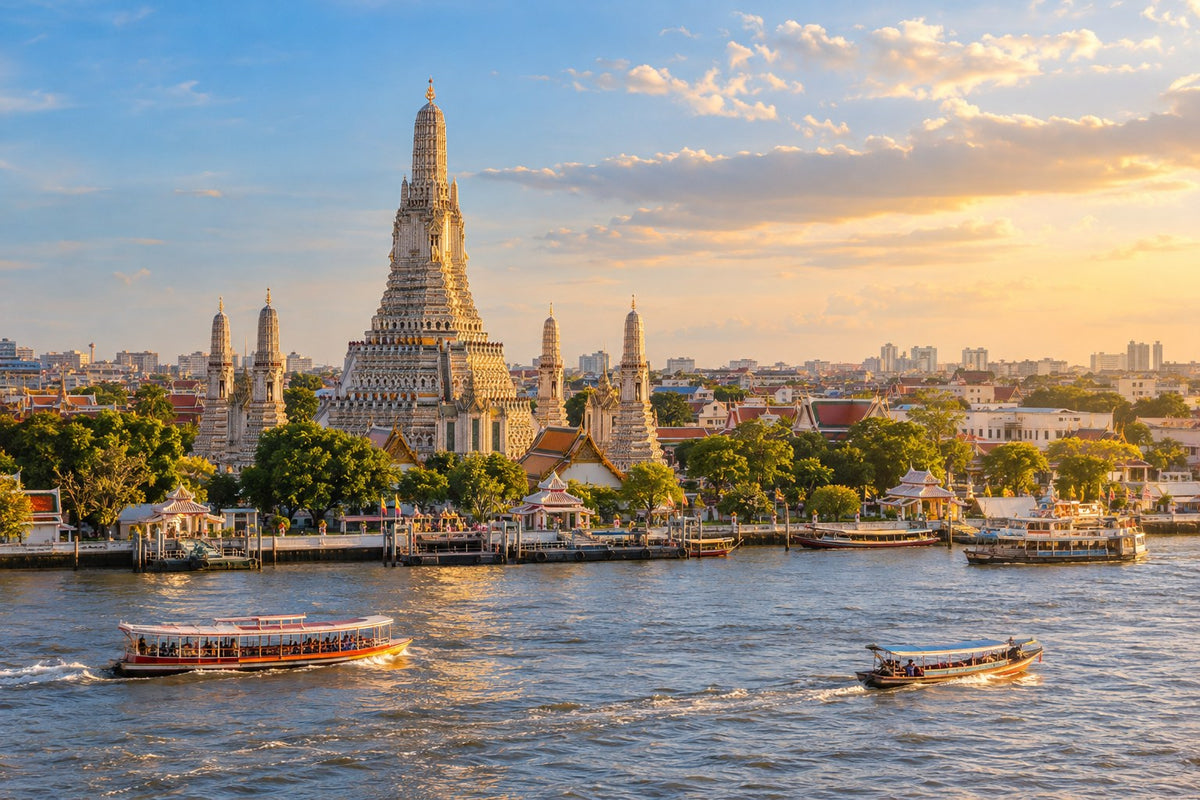
November is one of the most useful months to plan a first Bangkok trip: the cooler season is beginning, the river becomes a natural focus for sightseeing, and several major events give you a reason to look carefully at your dates. The best trip still starts with a practical decision: choose a convenient base, group your sightseeing by neighbourhood, and leave room for the city between the landmarks.
This guide covers Bangkok in November 2026, with advice you can also use for a wider winter visit: weather, where to stay, a three-day itinerary, food, transport and realistic spending. Official information was checked on 23 October 2026. The route and budget allowances are Leeylo’s editorial recommendations, rather than live bookings or a forecast for your travel dates.
Why visit Bangkok in November 2026?
Bangkok is already a major destination, but there is a timely reason to plan this particular month. Agoda reported a 14% year-on-year rise in accommodation-search interest from travellers across Asia for Bangkok stays on 9–22 November 2026, around the inaugural Eurovision Asia final. This is a defined platform and travel window, not a measure of all worldwide searches or a forecast of visitor arrivals. Read Agoda’s report.
For a visitor, the useful combination is broader than one event: the start of a more comfortable sightseeing season, active riverside evenings and enough variety for a short stay before another part of Thailand. You can spend a morning among temple courtyards, an afternoon in an old trading neighbourhood and an evening eating in Chinatown without trying to cross the whole city between every stop.
The planning opportunity: book the hotel location before filling the itinerary. A room that looks cheaper can cost you time and taxi fares if the nearest station is a long walk away or your evening plans are on the other side of the river.
Bangkok weather in November: is it a good time to visit?
November is generally a good time to visit Bangkok, particularly if you want outdoor sightseeing. The Tourism Authority of Thailand identifies November to February as the cooler season. “Cooler” is relative: expect warm days, sun exposure and some humidity, rather than European winter temperatures. See TAT’s seasonal overview.
November sits near the change out of the rainy season. Conditions do not switch on the first day of the month, and a seasonal pattern cannot tell you whether it will rain during your temple visit. Keep your most exposed sightseeing early, carry light rain protection and use a proper forecast close to departure. The Thai Meteorological Department is the place to check current warnings and weather.
Give the morning to outdoor sights
Start the Old Town early. Break for lunch and shade instead of using the hottest part of the day to walk between distant attractions. Take a slower afternoon if you have an important evening booked.
Keep one easy weather swap
Move a shopping, gallery or museum visit into a wet afternoon. Do not make a non-refundable sunset booking the only part of the trip you are excited about. Clear skies and colourful sunsets are never included in a ticket.
Pack light breathable clothing, comfortable shoes, sun protection, a compact umbrella and a suitable temple outfit. A thin extra layer can be useful in heavily air-conditioned trains and interiors. Before a long outdoor day, also check current conditions through Air4Thai, Thailand’s official air-quality service.
Bangkok events in November 2026: three dates to check
A festival is a reason to arrange the day differently, not an extra item to squeeze into the same timetable. These are separate occasions, and a ticket for one does not provide access to another.
- 6 November · Royal Barge ProcessionTAT lists the Royal Kathin Ceremony and procession to Wat Arun for 6 November, with a full-dress rehearsal on 28 October. If your visit overlaps, check official river, pier and temple-access arrangements before using a normal sightseeing route. A general announcement is not confirmation of an unrestricted viewing spot. TAT’s programme.
- 14 November · Eurovision Song Contest AsiaThe official Eurovision website lists the Bangkok final for Saturday 14 November, at 20:30 ICT. Attending the show requires the organiser’s ticket and entry arrangements; it is not a free attraction included in this guide. Plan the evening and your journey around the actual venue instructions. Official show information.
- 24 November · Loy KrathongBangkok riverside hotels are advertising their 2026 Loy Krathong celebrations for 24 November. For example, Anantara Riverside publishes an evening programme on that date. Public access, performances and any floating activities depend on the venue; a hotel dinner or cruise is a separate purchase. Example official venue programme.
Loy Krathong is not the same experience as Chiang Mai’s sky-lantern events. Do not expect a mass sky-lantern release over Bangkok. Choose a designated celebration, follow local instructions and avoid adding unapproved lanterns or objects to the river. You can enjoy the atmosphere without taking part in a floating activity.
Before paying: confirm the date, the actual entrance or pier, cancellation terms and what happens in poor weather. During major river occasions, keep your return journey flexible and allow time for queues. Check the linked organisers again shortly before visiting.
Where to stay in Bangkok for a first visit
For most first-time visitors, shortlist Asok, Silom or a well-connected riverside location. Then compare the real walking route from the property to the station or pier. “Sukhumvit” is a long road, “Riverside” covers both banks, and a hotel photograph cannot show you how easy the journey home will feel after dinner.
Asok / central Sukhumvit · convenient rail connections
Choose this area if you want restaurants, shopping and the useful connection between BTS Asok and MRT Sukhumvit. It is a practical base for moving around, rather than a place from which every temple is walkable. Check the exact soi, street noise and walk to the station: an address deep inside a side street changes the experience.
Silom / Sala Daeng · a balanced city base
This is a useful shortlist if you want food, access to Lumpini Park and the BTS–MRT interchange around Sala Daeng and Si Lom. The wider district varies from business streets to nightlife pockets. Choose the property location and recent noise reviews carefully instead of treating the whole neighbourhood as one atmosphere.
Riverside / Saphan Taksin · river journeys and slower evenings
Consider a location with clear access to BTS Saphan Taksin and Sathorn Pier, or a property with a reliable published shuttle. River views can be lovely, but a hotel on the opposite bank may depend on a crossing or shuttle schedule. Check its last service before booking late dinners elsewhere. A riverside room does not automatically mean fast access to all of Bangkok.
Old Town / Rattanakosin · early access to the historic sights
This suits a short visit centred on the Grand Palace, Wat Pho and nearby streets. Measure the distance to MRT Sanam Chai and decide how you will return after dark. It can be rewarding to stay close to your main interests, but do not assume the transport connections match central Sukhumvit.
Ari · cafés and a more residential rhythm
Consider Ari if you prefer a café-led stay and neighbourhood time, with the BTS as your link to other districts. It is less direct for a trip dominated by Old Town temples and river evenings. Choose it because you want to spend time there, rather than simply because a hotel listing calls it a hidden gem.
Before reserving, check four things: the actual station walk, the room’s noise exposure, late-arrival arrangements and the cancellation policy. For a short trip, it usually makes more sense to keep one Bangkok base than to spend time moving hotels between districts.
How many days do you need in Bangkok?
Three full sightseeing days are a strong starting point for a first visit; four give you more breathing room. Count usable time rather than calendar dates. Landing in the evening and leaving early three dates later does not give you three full days.
- Two full days: keep the Old Town, a river journey and Chinatown. Choose a few priorities and leave the bigger excursions for another visit.
- Three full days: use the route below, with time for old neighbourhoods and a day shaped around markets, parks, art or shopping.
- Four or five full days: add a slower day, a cooking experience or a carefully planned excursion. Ayutthaya deserves its own day rather than being attached to an already full city programme.
If Bangkok is the beginning of a longer holiday, let the first afternoon be light. It is better to reach a neighbourhood dinner comfortably than to lose a prepaid attraction because immigration, baggage collection or the airport journey took longer than expected.
A practical 3-day Bangkok itinerary for first-time visitors
This is an area-based outline for three full days, not a promise that every attraction can be visited on any date. Move the market option to a weekend and change the Old Town day if ceremonies affect access. Transfer times depend on your hotel and the conditions that day.
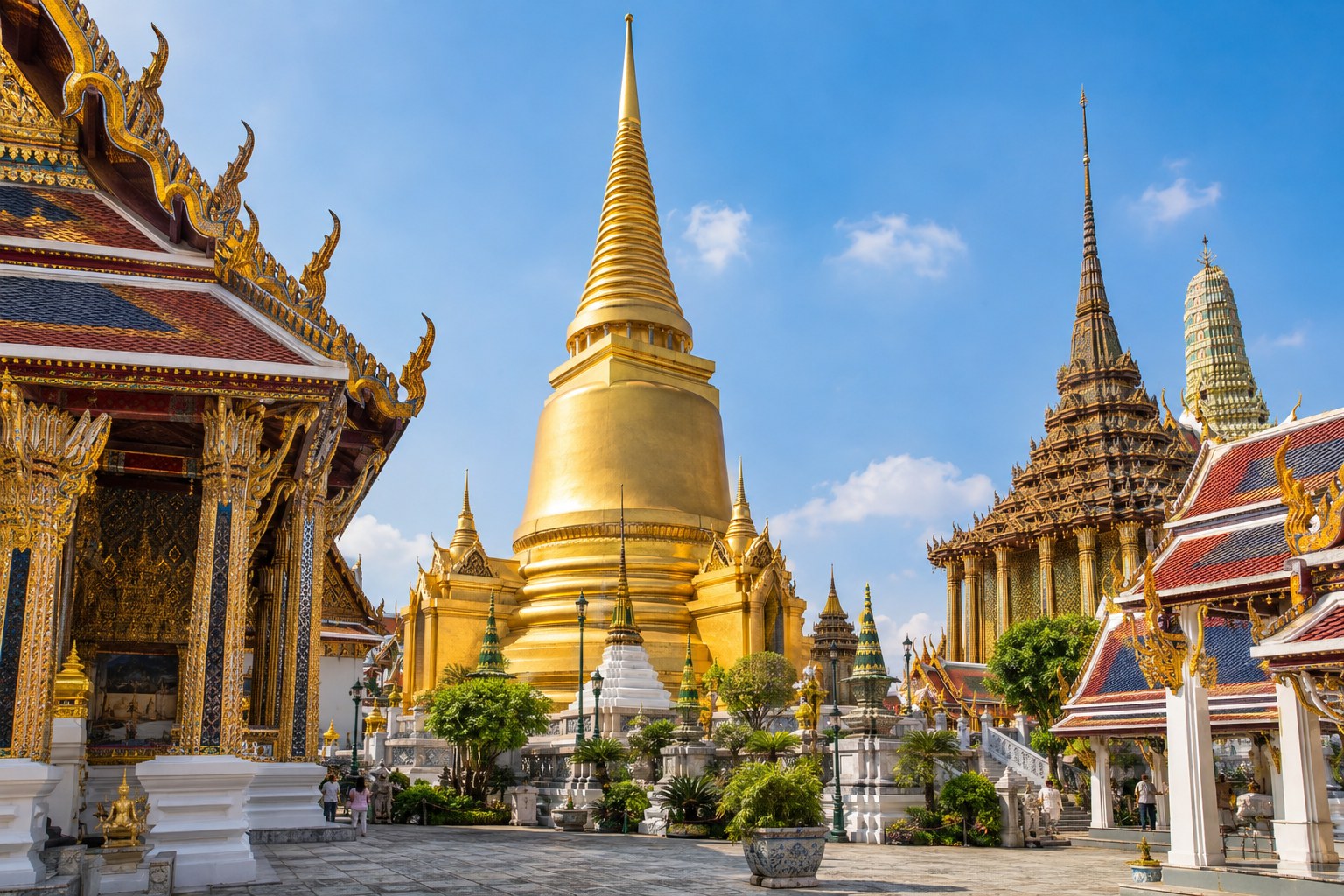
Day 1 · Grand Palace, Wat Pho and a river evening
Morning: aim for the Grand Palace’s 08:30 opening after checking the official schedule. Allow roughly two to three hours, depending on your pace and queues. The published foreign-visitor admission is THB 500, including Wat Phra Kaew and the Queen Sirikit Museum of Textiles within the compound. Do not buy a separate “Emerald Buddha ticket” from an unofficial seller. Official price and visitor information.
Lunch and early afternoon: stay around Tha Tien for a proper food and water break, then visit Wat Pho. Its official visitor page lists THB 300 for admission. Give the courtyards and the Reclining Buddha time, and remember this remains an active religious site. Wat Pho’s visitor information.
Later: if you still have energy and access is normal, cross to Wat Arun using the operating local service and check its current admission and last-entry arrangements at the temple. Otherwise save it for another day and enjoy the river from the Tha Tien side. Finish with dinner in the same part of the city or return towards your own base.
A better day is allowed to be shorter. The Grand Palace and Wat Pho already make a substantial visit. Wat Arun is the optional third temple, not a test you need to pass. Around 6 November, use the official ceremony notices before relying on this route.
Grand Palace in Google Maps · Wat Pho · Wat Arun
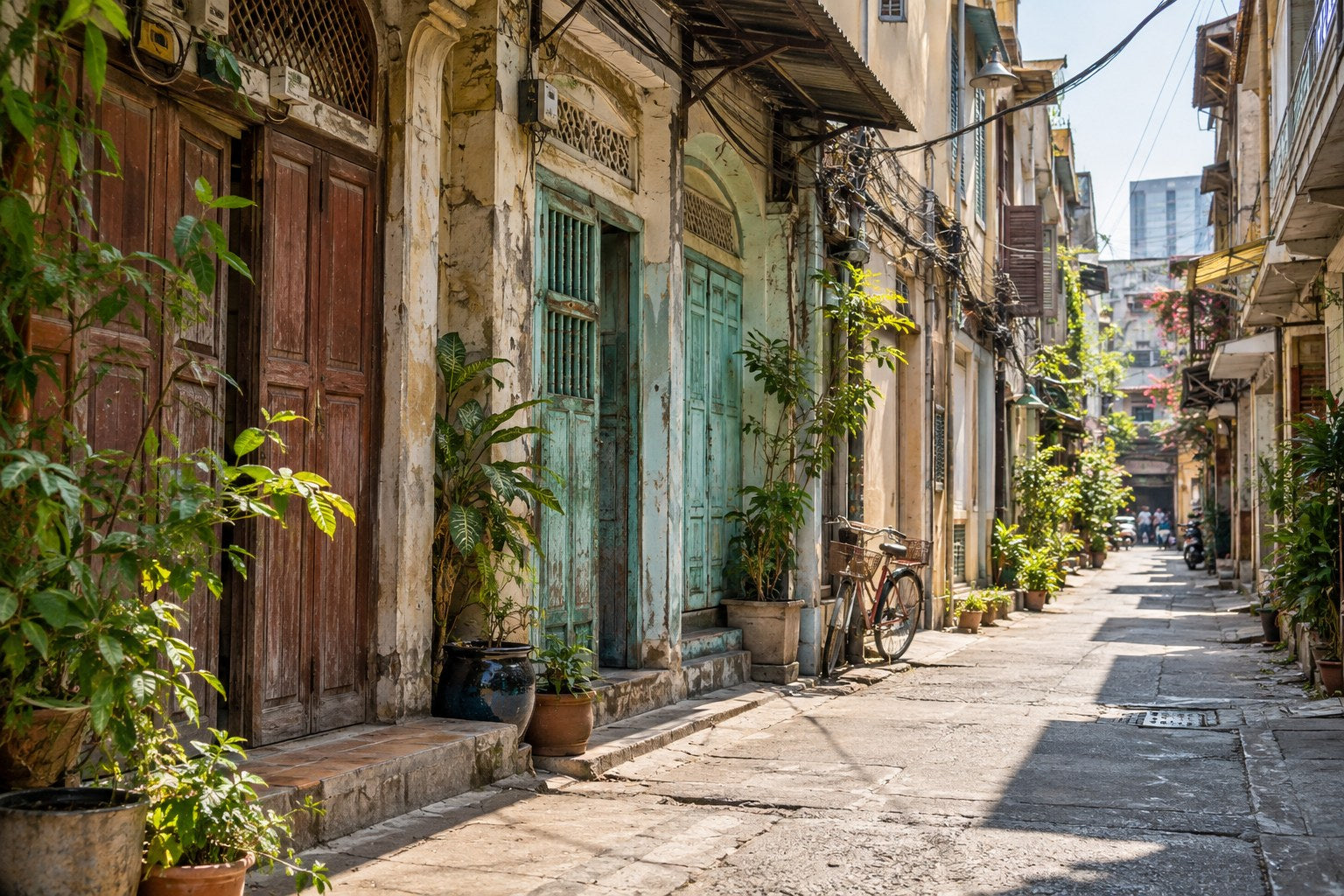
Day 2 · Talat Noi, Charoen Krung and Chinatown after dark
Late morning: explore Talat Noi on foot, then continue into the Charoen Krung area. Look for the contrast between old trading streets, workshops and contemporary cafés. Avoid turning residential doorways into photo props, and do not enter private courtyards just because an image online looks inviting.
Afternoon: choose a shaded café, gallery stop or relaxed lunch. If you are tired, return to the hotel before the evening instead of walking in the heat until dinner. Keep any riverboat journey tied to a useful destination: a short crossing or a ride between two stops can be enough.
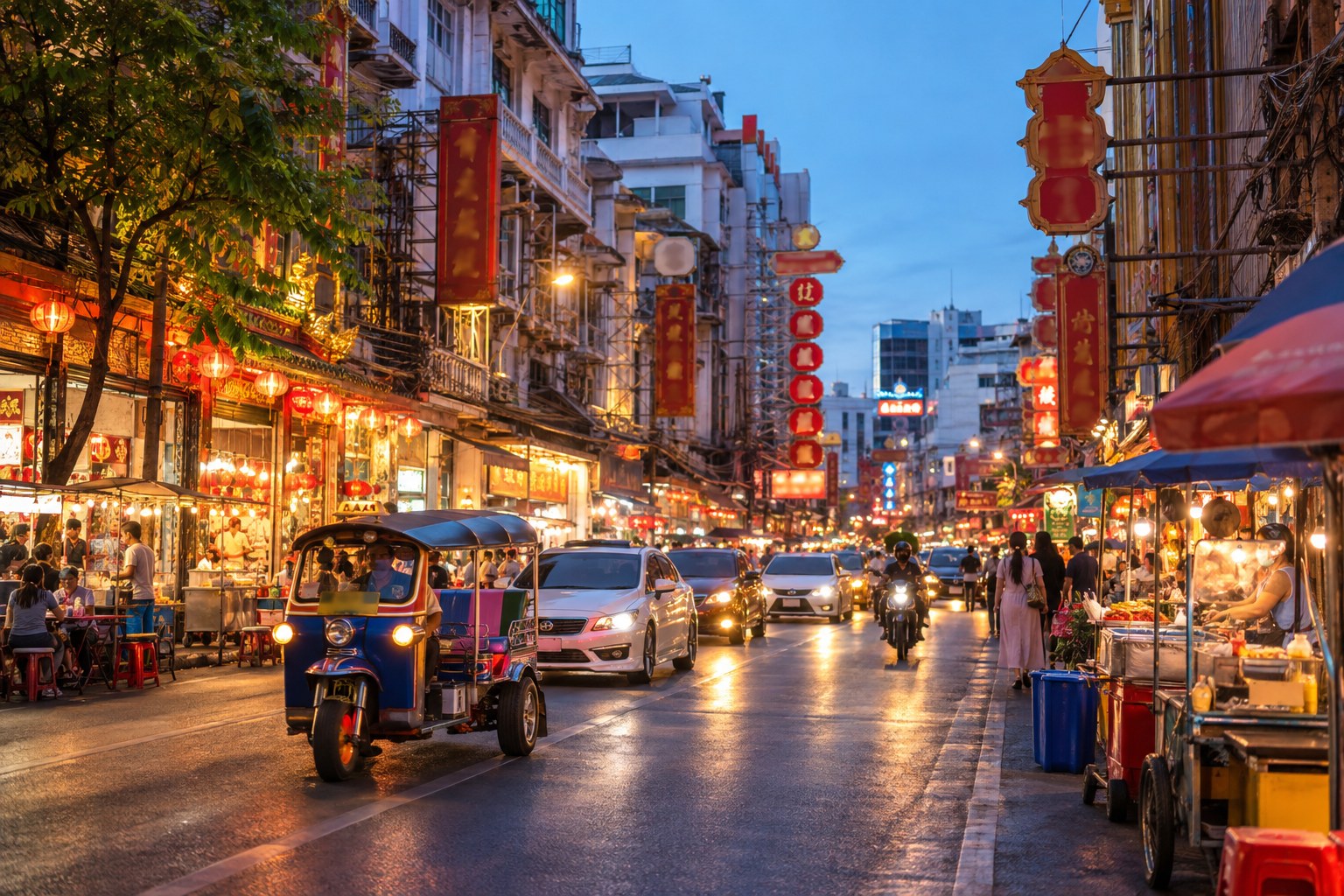
Evening: arrive in the Yaowarat area as the food streets become busier. Use MRT Wat Mangkon as a useful rail reference and check the last train for your actual journey. Rather than ordering a large seafood meal immediately, try a small sequence: a savoury dish, something grilled or steamed, then a dessert. Individual stalls keep their own hours, and not every famous stall trades every night.
Find Talat Noi · Find Yaowarat Road · MRT Wat Mangkon station information
Day 3 · Choose a weekend market or a park-and-city day
If it is Saturday or Sunday: give Chatuchak the first part of the day. The market information site lists the full weekend market for 09:00–18:00; weekday openings cover different sections and are not the same experience. Go with a few interests rather than trying to see every aisle, and keep purchases small enough to carry comfortably. Check market opening arrangements.
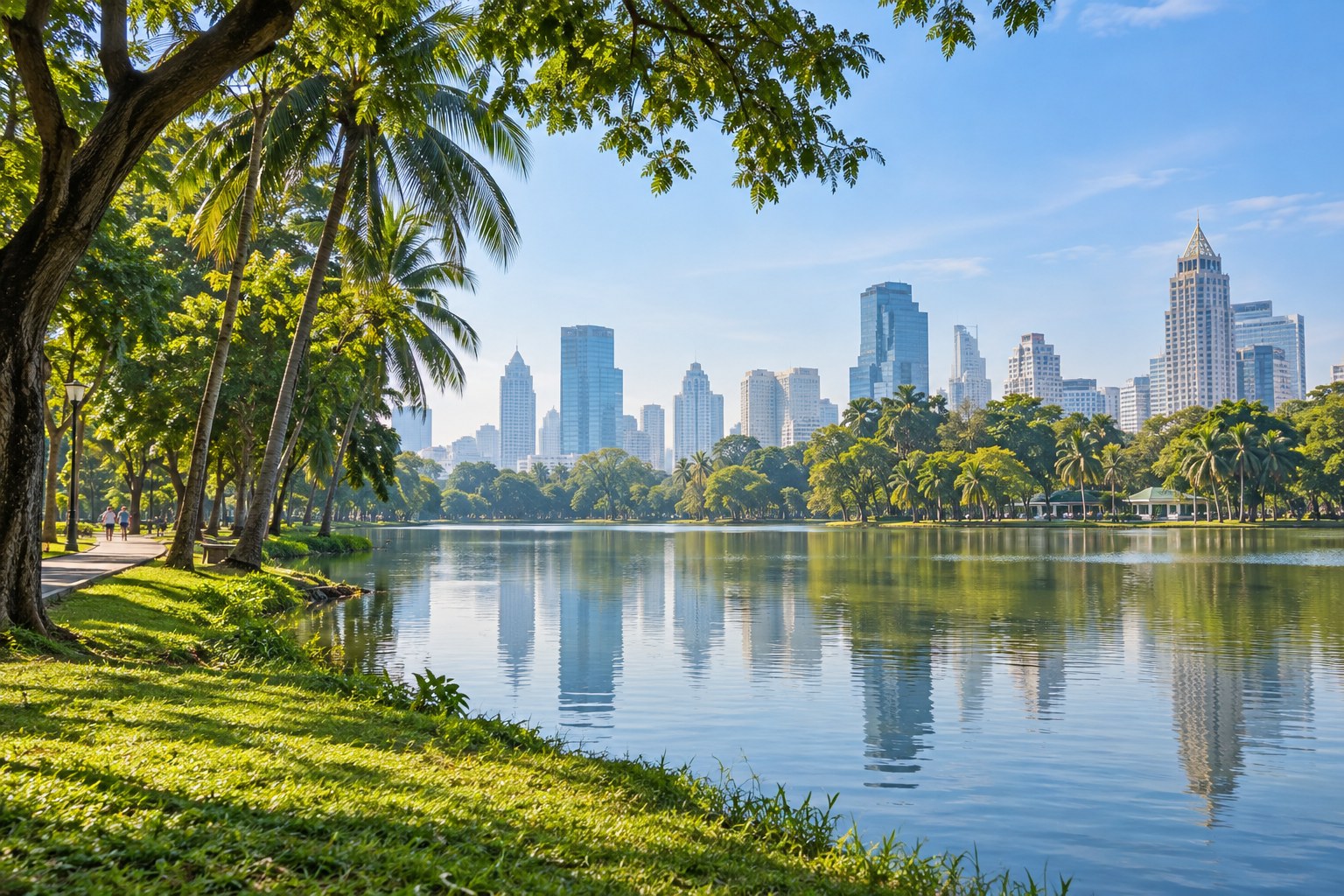
If it is a weekday, or you prefer a slower morning: start in Lumpini Park while conditions are comfortable, then travel towards the Siam area for lunch, shopping or a cultural stop. Bangkok Art and Culture Centre is a useful option to check, but it closes on Mondays and exhibition schedules vary. Use its official site for the current programme and opening hours.
For the final evening: choose one priority: a restaurant with a view, a reserved rooftop, a live show you genuinely want to see, or dinner in a neighbourhood you have enjoyed. Check dress requirements, minimum spend and weather terms before booking a rooftop. Keep the evening lighter if you have an early flight.
Chatuchak in Google Maps · Lumpini Park · Bangkok Art and Culture Centre
What to eat in Bangkok: beyond a single famous queue
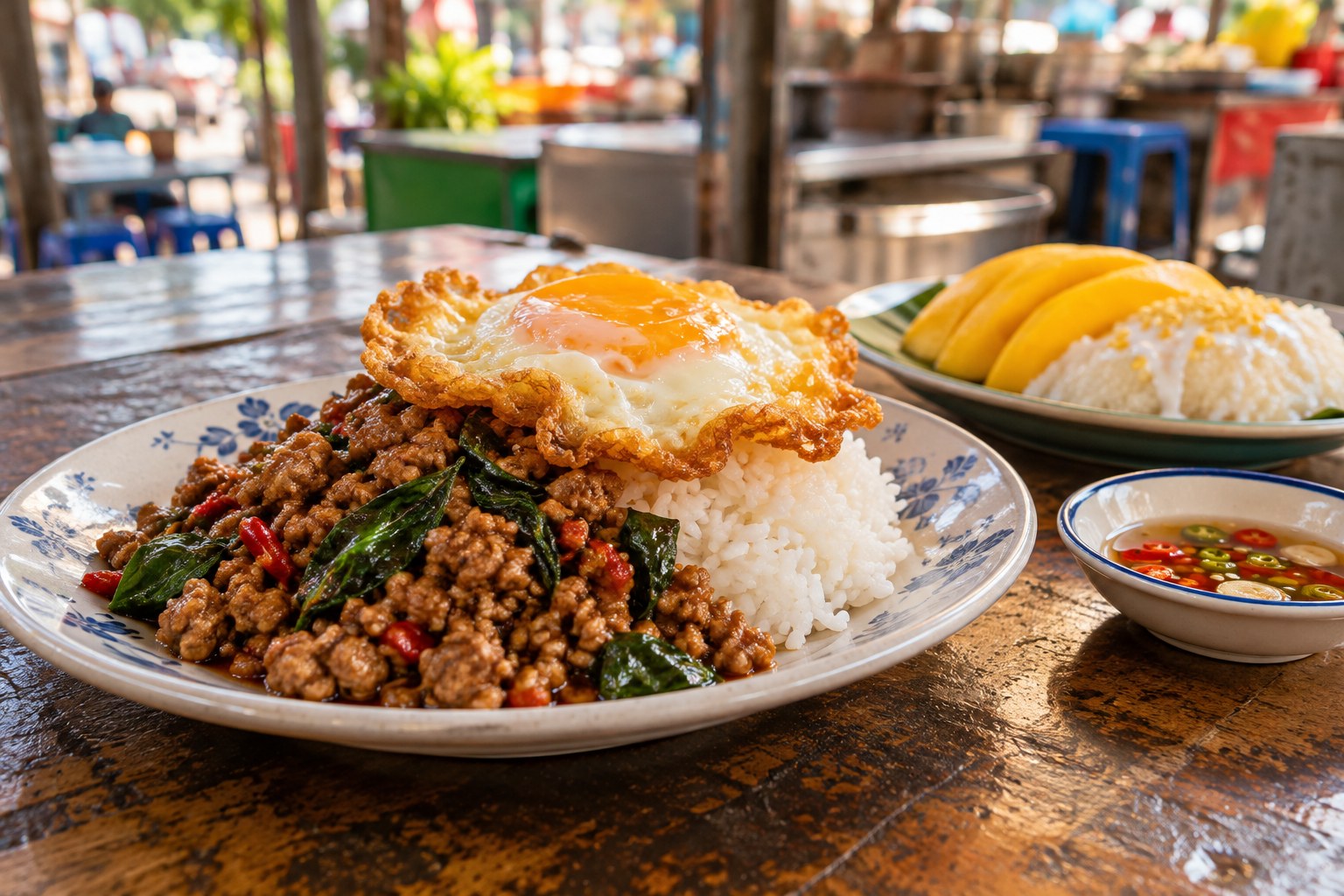
Bangkok food planning works best as a handful of dishes and neighbourhoods. Save one or two specific places if you want to, but leave room for an ordinary local meal near your route. A long journey and a long queue can turn an inexpensive lunch into the most time-consuming part of the day.
- Pad kra pao: basil stir-fry with rice, often ordered with a fried egg. Ask about the meat, spice and sauces rather than assuming every version is identical.
- Boat noodles or another noodle soup: a smaller bowl can be a useful lunch or part of a food walk. Check the broth and ingredients if you avoid meat or particular products.
- Khao man gai: chicken rice, often a straightforward daytime option when you want something less involved than a large shared meal.
- Yaowarat’s Thai-Chinese food: look for dumplings, noodles, grilled dishes and desserts; read the actual price before ordering seafood sold by weight.
- Mango sticky rice: a good dessert to share when you have already been eating your way through a neighbourhood.
For everyday planning, allow roughly THB 70–150 for a simple local dish and THB 70–150 for a café drink, with plenty of exceptions in both directions. These are editorial allowances, not a quoted citywide tariff. Restaurants, premium coffee shops and riverside venues can cost much more; check service charges and tax on the menu.
Choose food handled carefully and cooked fresh, ask clearly about allergies and dietary requirements, and keep enough water in the budget. Local QR-payment signs do not mean that every foreign bank app can pay. Carry a sensible amount of cash in smaller notes as well as a card.
How much does a 3-day Bangkok trip cost?
For three full sightseeing days, a useful starting allowance is THB 2,150–4,700 per adult, excluding accommodation and airport transfers. This combines the categories below. It is a planning example with local food, ordinary city transport, the Grand Palace and Wat Pho, plus an optional-experience allowance. It is not a package price.
Food, water and coffee
THB 1,050–1,950 for three days. This is THB 350–650 a day. Build around simple meals and a few café stops; a premium dinner or regular cocktails need a separate allowance.
Ordinary city journeys
THB 300–750 for three days. This is THB 100–250 a day, mostly using rail, ordinary boats and short journeys. Repeated taxis, long rides and airport transfers are outside this example.
Two core temple tickets
THB 800 once per foreign adult. Grand Palace / Wat Phra Kaew: THB 500. Wat Pho: THB 300. Wat Arun and any other paid stops are additional; check their current admission.
Your optional extras
THB 0–1,200 in this example. This is an adjustable pot for extra admissions or a small experience, not a promise that every rooftop, observation deck, show or cruise fits inside it.
The arithmetic: THB 1,050–1,950 + THB 300–750 + THB 800 + THB 0–1,200 = THB 2,150–4,700. Add your actual room cost, airport journeys and chosen premium experiences. A festival dinner or show ticket can exceed the entire optional-extras allowance on its own.
For hotels, compare live prices for your exact dates and total stay. Keep room per night separate from person per day: two people sharing a room do not each pay the full room price. Check whether taxes, breakfast and cancellation flexibility are included, and remember that a three-day visit might mean two, three or more hotel nights depending on your flights.
Spend where the experience changes. A better-connected hotel, a meal you genuinely want and one carefully chosen paid experience can improve a short trip more than buying tickets for every view. Keep the currency in Thai baht while planning; convert at your own current card or exchange rate.
Getting around Bangkok: airports, BTS, MRT and boats
Check whether you are arriving at BKK or DMK
Suvarnabhumi (BKK) and Don Mueang (DMK) are different airports. Do not save an airport-transfer instruction without checking the code on your ticket. From BKK, the Airport Rail Link can be useful for connecting with the city’s rail network; luggage, your arrival time and the final walk to the hotel decide whether it is the best choice. Use the airport’s transport information for the current options.
For a late arrival, several suitcases or a hotel far from rail, a licensed taxi or booked car may be simpler. Use the airport’s designated service or the official pickup instructions in your chosen app. Confirm how tolls and airport charges are handled. Allow more time than a navigation app’s best-case road estimate, especially before an international flight.
Use BTS and MRT for the longer urban movements
Start with the station nearest your actual destination. Sanam Chai is useful for Wat Pho and part of the Old Town; Wat Mangkon is useful for Chinatown. BTS Asok and MRT Sukhumvit form a practical interchange, as do BTS Sala Daeng and MRT Si Lom. Consult the MRT map and BTS information rather than treating every rail line as one ticket system.
Check the fare and accepted payment at the specific operator. Do not assume one card or pass covers the whole rail network, boats and airport trains. Save the last-train information for your return journey if you plan a late evening.
Use the river when it improves the route
Bangkok has cross-river ferries, commuter boats, tourist boats and private hotel shuttles. They are different services, with different stops and tickets. A short local crossing to Wat Arun is not the same purchase as a tourist-boat day pass. Check your destination, pier and direction before boarding; on ceremony days, follow current notices even if an old guide gives a normal timetable.
For a sightseeing service, consult the Chao Phraya Tourist Boat operator. Compare a pass with the journeys you will actually make instead of buying one automatically. Google Maps place links help locate the stops in this guide; they do not guarantee a boat’s operation or provide a ticket.
First Bangkok trip: six mistakes worth avoiding
- Believing a stranger who says the palace is closed. Check the official schedule and the official entrance staff. Genuine closures happen, but they do not make an unsolicited shopping tour a good replacement.
- Arriving at temples in beachwear. Wear suitable clothing covering shoulders and legs. The Grand Palace’s published rules are stricter than “bring a scarf”: avoid shorts, sleeveless tops, torn or tight trousers and transparent clothing.
- Planning by straight-line distance. River crossings, station walks and road traffic matter. Do not put Chatuchak, the Old Town and a faraway dinner reservation into the same rushed afternoon.
- Buying an event ticket before understanding its location. Check where you enter, how you return, whether a meal is included and what cancellation terms apply.
- Confusing the arrival card with immigration permission. The TDAC is a separate arrival form. Visa or visa-exemption eligibility depends on your passport and circumstances; check the Thai embassy responsible for your application before travelling.
- Expecting one article to know your flight and hotel. Adjust the arrival day, departure day and transfers to the actual booking. A generic three-day route becomes useful when it fits the time you really have.
For foreign visitors to whom it applies, use the free official TDAC system within the three-day submission window before arrival. Follow its current eligibility and timing instructions; the arrival card is not a visa. Save the confirmation and your hotel address in English.
Your Bangkok trip checklist
If you are continuing to the islands: Bangkok and Phuket are different parts of the trip, with different weather decisions and transfer needs. Our Phuket travel plans can help with the next stop. Keep a separate transfer day rather than trying to combine a full Bangkok programme with a flight and an island excursion.
Bangkok in November: frequently asked questions
Is November a good month to visit Bangkok?
Usually, yes. It is the beginning of the cooler season and can work well for sightseeing and evening walks. Early-season rain is still possible, so use the current forecast and keep a flexible afternoon rather than expecting guaranteed dry weather.
Is Bangkok rainy in November?
Rain can still occur as the season changes. A general trend towards drier conditions does not predict an individual travel day. Pack light rain protection and use museums, galleries or shopping as an alternative when conditions are poor.
Are three days enough for Bangkok?
Three full days are enough for a useful first introduction: the Old Town, the river, Chinatown and another area or market. They are not enough for every major sight and several day trips. Four days give you more room, especially after a long flight.
What is the best area to stay in Bangkok for a first visit?
Asok, Silom and a well-connected riverside location are useful starting points. Choose by the actual station or pier walk and your interests. An isolated riverside hotel and a room beside an interchange can produce very different journeys even when both are described as central.
When is Loy Krathong in Bangkok in 2026?
Official Bangkok hotel programmes, including Anantara Riverside’s, advertise 24 November 2026. The time, access rules and included activities belong to each venue. Check the current programme before making a reservation, and do not confuse Bangkok’s river celebrations with Chiang Mai’s sky-lantern events.
How much spending money do I need for three days?
The example in this guide allows THB 2,150–4,700 per adult for three days of food, ordinary city transport, the Grand Palace and Wat Pho, plus optional extras. Accommodation, flights and airport transfers are excluded. Premium dinners, festival events and observation decks can raise the total substantially.
Can I visit the Grand Palace, Wat Pho and Wat Arun in one day?
It can be possible when all three are open normally, but it is a substantial day. Start early, include lunch and check boat access. Keep Wat Arun optional if you are tired or queues are long, and use a different arrangement if the Royal Barge Procession affects your dates.
Do I need to book everything in advance?
No. Prioritise your hotel, fixed-date events and any restaurant or experience you would be disappointed to miss. Follow the official booking rules for attractions. Leave ordinary meals, neighbourhood walks and some afternoons flexible.
Can I add Bangkok to a Phuket holiday?
Yes, if the flight and transfer days leave enough usable time in both places. Check BKK versus DMK for each flight and allow for any airport change. Do not count a travel day as a full sightseeing day or assume a same-day connection is protected when the tickets are separate.
Sources, checks and keeping this guide useful
Checked on 23 October 2026. Event programmes, admission prices, transport arrangements and entry requirements can change. Recheck the official information that affects your own dates. The itinerary, area comparisons and spending allowances are editorial guidance; this article does not claim firsthand attendance at future events.
- Agoda: Bangkok accommodation-search interest around the November final — a specific platform, source market and stay window.
- TAT: general cooler-season context — seasonal background, not a 2026 weather forecast.
- TAT: Royal Barge Procession and rehearsal dates.
- Eurovision: official Asia final information.
- Anantara Riverside: dated 2026 Loy Krathong programme — one venue’s paid event, not the entire city programme.
- Grand Palace: admission and clothing rules · official visitor FAQ.
- Wat Pho: visitor information and admission.
- Chatuchak visitor website: market opening pattern — use local notices for holiday changes.
- Bangkok Art and Culture Centre · MRT · BTS · Chao Phraya Tourist Boat.
- Thai Immigration: TDAC instructions · current weather · current air quality.


